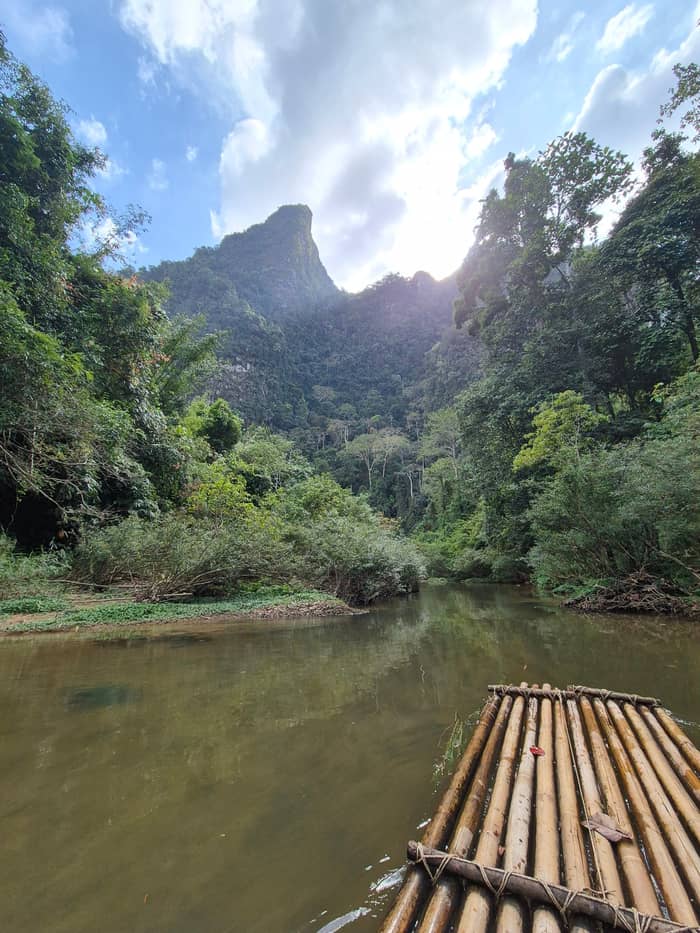
Trail day
Walking shoes
For forest trails
- FitsUneven, slippery ground
- Asked byA one-day lake trip
- TipPair with quick-dry socks
Tap-to-check list
10-item checklist
Tick each item when it is done. Your place is saved on this device.
0 / 10 ready
All set. Only the date and your pickup place are left to choose.
Claim a spotA practical packing and safety guide for a day or a night in the rainforest: shoes, rain cover, sun and insects, what the tours say to bring, wildlife rules, advice for children and the official help on call.
Editorial team, khaosokjunglehike.quest · Updated November 16, 2026 · Read in 9 min
Summary view
Khao Sok National Park tips start with a short list, because a day in the forest needs a smaller bag than you might think. The tour records agree on the basics: footwear that grips, sun and insect protection, something to keep the rain off and dry clothes for after a swim. One lake-day listing wants comfortable walking shoes plus sunscreen, a hat and insect repellent. Pack the night before, so you do not forget a hat or the repellent in a hurry.
The listing for a 2-day raft-house trip adds a swimsuit, a towel and spare clothes, and wants walking shoes that cope with uneven, slippery ground. A private lake tour asks for a waterproof bag and a jacket in case it rains, and the full-day walk and canoe tour tells guests to bring a sarong for the temple stop and suggests a waterproof camera. None of this needs special gear: ordinary outdoor clothing, bought for any warm, wet climate, will do.
Put those lines together and you have a short, light packing list. A small day pack, a dry bag for the phone and wallet, a spare T-shirt, a hat, repellent and a bottle that you can refill covers almost everything the records ask for. Anything beyond that, such as a tripod or a second camera, is more likely to be a burden on a hot trail than a help. Check your own booking's confirmation for any extra line, since each operator words its own advice.
Match the kit to the day
| Outing | Bring | Source |
|---|---|---|
| Lake day with a cave | Closed-toe shoes or sandals | Listing note |
| Dam boat day | Strapped sandals, shorts, T-shirt | Listing note |
| Walk and canoe day | A sarong and a waterproof camera | Listing note |
| One-day lake trip | Walking shoes, sunscreen, hat, repellent | Listing note |
| Private lake tour | A waterproof bag and a jacket | Listing note |
| Overnight raft-house trip | Swimsuit, towel, spare clothes | Listing note |
Each line is the packing advice of one listing; always read the one for your own booking.
Footwear is the choice that matters most, and the records give two answers for two kinds of day. For the lake day with a jungle trek through the Diamond Cave, one listing advises sandals with straps, shorts and a T-shirt, tells guests to leave big walking boots behind, and says you may get wet. For the cave in the rainy season, another listing asks for closed-toe shoes or sandals.
For a longer walk on a forest trail, take something that grips and dries quickly. A 2-day lake listing asks for comfortable walking shoes suited to uneven and slippery terrain, and its Coral Cave walk of about 1.5 kilometres is on uneven ground. Socks and shoes that survive a stream crossing are more useful than a new pair of boots that stay wet all afternoon. Dry the shoes overnight if you can, and keep fresh socks in the dry bag.
As for clothes, choose light, loose layers in quick-dry fabric, and keep your shoulders and knees covered if the day includes a temple. The full-day jungle walk asks guests to bring a sarong to cover up there. The heat is the other consideration: the average daily high in April is 35.3 °C at the nearest station, so a hat and a long sleeve against the sun are sensible.2 Dry feet make the trip home far more comfortable.
Rain is part of the park, not an exception to it. TAT sets the southwest monsoon between May and October and describes the usual downpour as a brief one, 1-2 hours, late in the day.3,4 The station record shows 9 or more rainy days a month from May to November, with a peak of 13 days in September and October.2,2,2 Treat those figures as a planning guide: a morning start is usually finished before the afternoon showers begin.
A dry bag solves most of the rain problem. Put your phone, wallet and a spare shirt in it, and the weather becomes a matter of comfort rather than of damage. One lake tour asks for a waterproof bag and a jacket in case it rains, and that is the right idea for a raft, a boat or a river crossing, where water comes from below as well as from above. Dry clothing for after the river is worth more than any extra piece of gear in the bag.
Rivers can rise quickly after heavy rain, as the flash flood at Khlong Sok on 18 September 2026 showed,5 and TAT's advice for flood time is to stay out of the water, which can be unsanitary.6 If heavy rain has fallen overnight, ask the operator whether the trail and the river are fit, and accept a changed plan without argument. Treat the trail as a place where the weather decides, and plan a half hour of margin at each end of the day.
What now?
Tell us what your day includes and we tell you what to put in the bag.
If My day includes a jungle trail
Walking shoes
A listing asks for shoes suited to uneven, slippery ground.
If My day includes a cave
Closed-toe shoes
Another lake listing wants covered shoes or sandals at the cave.
If My day includes a temple
A sarong
The full-day walk tells guests to bring one.
If It might rain
A dry bag and a jacket
A lake tour asks for both.
If I am staying overnight
One bag and a charged phone
The luggage limit is a single piece per person.
Footwear choices
Trail day
For forest trails
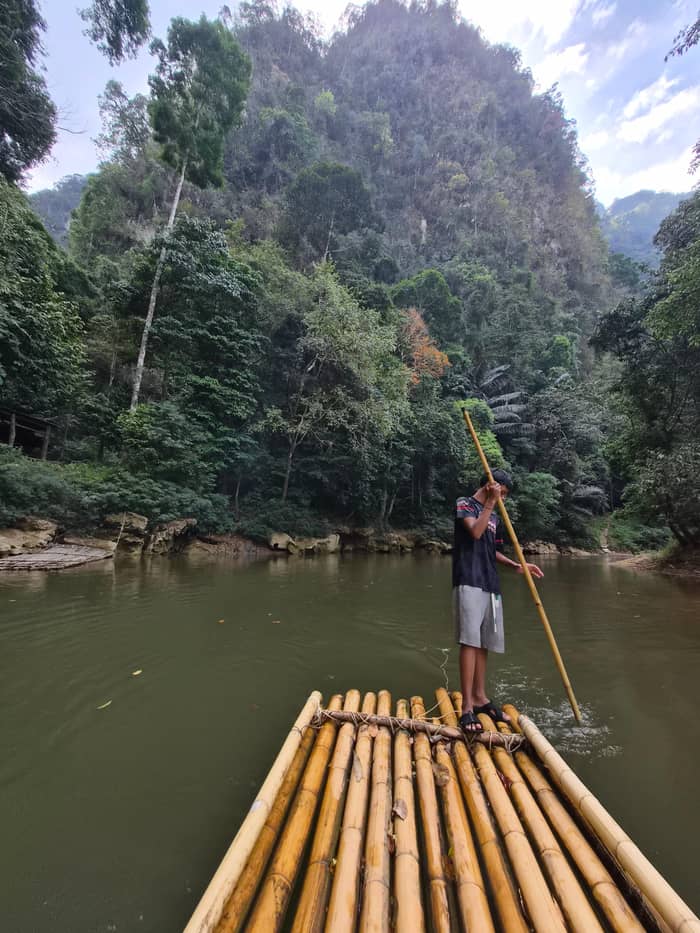
Lake day
For easy lake days
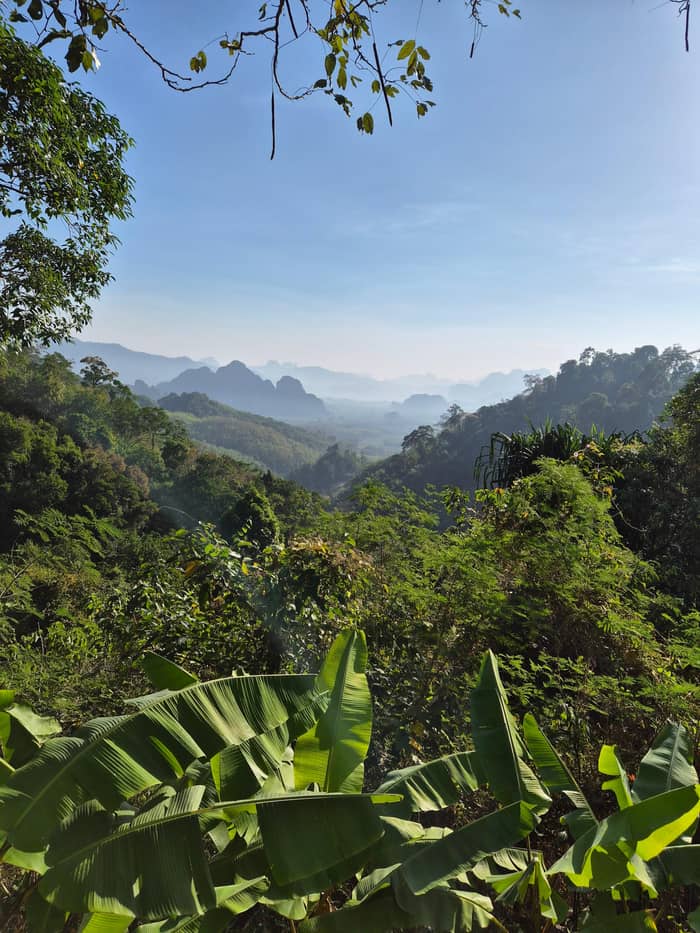
Cave stop
For cave entry
Is Khao Sok National Park safe? No outdoor trip is free of risk, and nobody can promise safety in a rainforest, but the park has rules and help in place. TAT's guidance for national parks is brief: keep to marked trails, walk as a group and do what park officials say, always.1 A guided small group, as the home tour offers with a maximum of 7 guests, is built for exactly that. Going with a guide who knows the terrain is the simplest way to cut the risk.
Help is organised. The Department of National Parks says its National Park Rescue Centre 6 in Phuket is ready around the clock, and that it covers 21 southern parks, Khao Sok among them.8,9 In the September flood, park staff and local rescue foundations helped residents and foreign tourists stranded in riverside resorts, and everyone was safe.10 These facts describe a system, not a guarantee, and your guide is its first point of contact on the day.
Most of the sensible precautions are simple. Drink water, take breaks in the heat, tell your guide about any medical condition and listen to the briefing at the headquarters. One lake-day listing says it is not recommended for guests with severe mobility issues, and the 2-day raft-house listing excludes pregnant women, guests with serious mobility issues and children under 3 years old. Tell the guide about anything that worries you before the start, and they will adjust the pace.
Know what you pay
Enter your party and compare three Khao Sok outings by starting price.
Compare 3 alternatives
Enter your party and compare three Khao Sok outings by starting price.
≈
View≈
View≈
ViewGetYourGuide's starting prices, converted at the ECB reference rate; exact pricing appears when you book.
The night before
Evening before
Phone, wallet and a spare shirt go in a waterproof bag.
Before bed
Overnight raft houses have limited electricity hours.
At pickup
A hat, sunscreen and repellent are on one listing's list.
At the headquarters
The home day registers at the park headquarters.
On the trail
TAT says to stay on marked trails and follow park officials.1
At the river
A raft ride follows lunch on the home day.
Animals are the other safety topic, and TAT is clear about the manners. Park rules apply to everyone, and TAT wants walkers on marked trails and obeying officials, for the sake of both people and animals.11 Not feeding wildlife is on its short list of national park tips as well.7 Keep food sealed and out of sight, and do not offer a monkey anything. The rules are the same for a guided group and for a solo walker, so there is no shortcut for anyone.
For an elephant, TAT's guidance says to stay calm and quiet and to avoid shouting, sudden noises or sudden movements,12 to avoid remote spots around sunrise and sunset, when wildlife is busiest,13 and to move away slowly without running or turning your back.14 You are unlikely to need any of it on a guided day, but it is worth reading once. Those are TAT's guidelines for national parks nationwide, and they are plain enough to read aloud to a group.
Elephants are not the day's likely drama. The park's lists describe many species,15 but the animals the waterfall trek names for a walk are monkeys, gibbons and insects. Look, enjoy and keep your distance, and let the guide decide how close is close enough. The same rules apply on a night walk. Rest on a rock, listen for the forest, and let the group move on a few steps if an animal sits close by, rather than pushing past.
Video
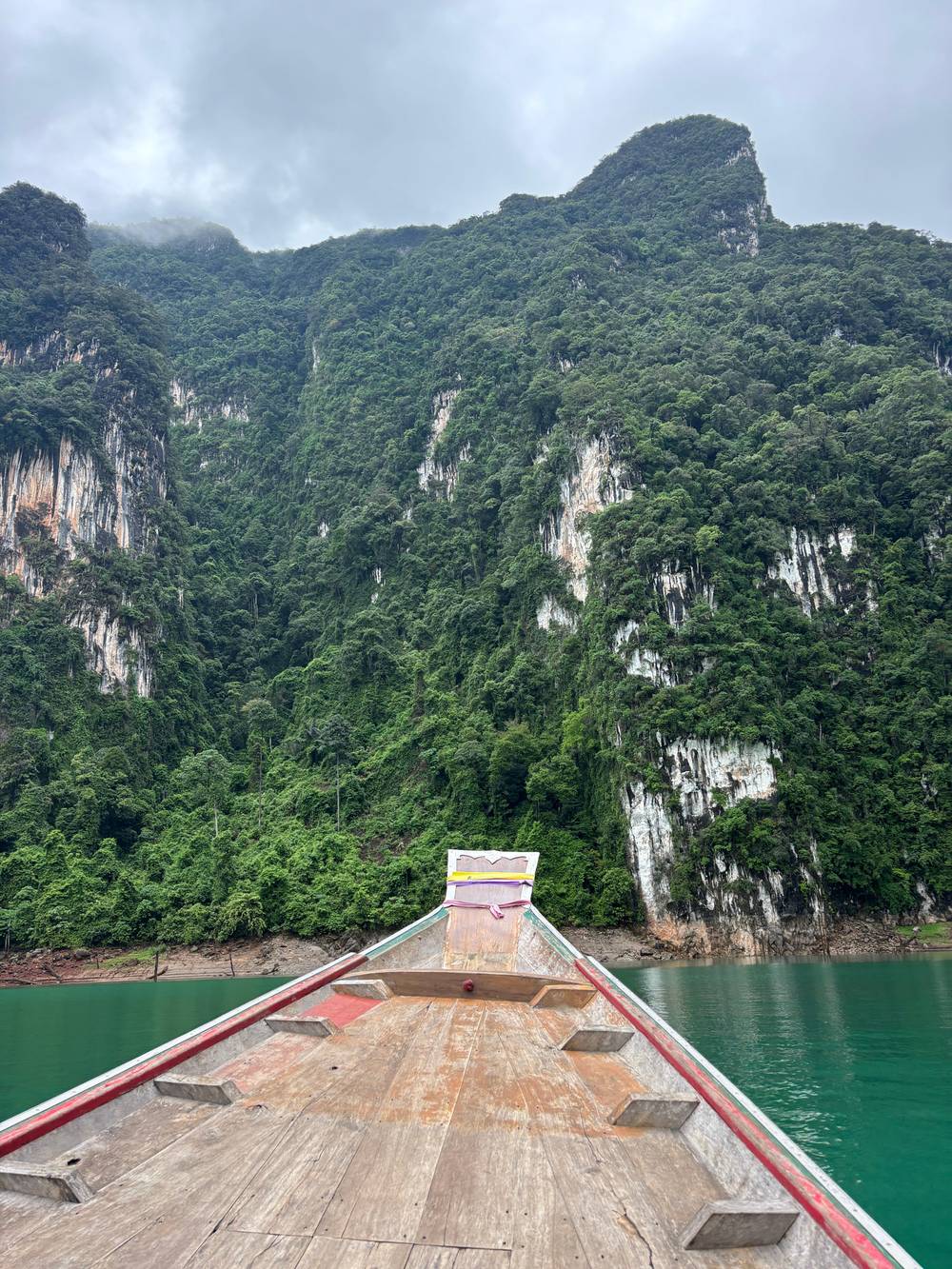
Alex On the Move on YouTube · Tap play to load the video; not before.
Stick to marked trails, travel in groups, and follow park officials’ instructions at all times
Khao Sok National Park kids tips begin with age limits, which differ by outing. The half-day hike lists a minimum age of 7 years and is rated easy to intermediate over about 6 to 7 kilometres round trip. The 2-day raft-house trip rules out children under 3 years old, so a family with a toddler should look at shorter, simpler outings. Ask the operator for the exact age rule of your booking, since each tour sets its own.
The home tour labels its trail intermediate in one place and easy in another, at 6 to 7 kilometres or 5 kilometres of walking depending on the line you read, so ask the operator how it works with children before booking. For younger children, the bamboo raft outing, a short half day with just 1 hour on the river, is the gentlest way to see the valley. Whichever outing you pick, tell the operator the ages of the children when you book, and ask whether there is a shorter route for small legs.
Pack for children as you would for yourself, with extra water, snacks, a spare set of clothes and sun cream, and remember that a hot forest tires small legs sooner than expected. Choose a small group, a morning start and a guide who is happy to slow down, and tell the guide the age of the youngest member before the walk begins. The raft and the swim stop are easy to plan for children, and the walk is the part that needs the most thought.
Before you pack for an expense, check what the price includes. On the home tour the park gate fees and the raft paddler are already paid, alcohol is not, and a Thai lunch and a bamboo cup of tea or coffee come with the day. You do not need cash for the park gate on that day, though a little for a tip or a drink is practical. A short list of what is already paid for stops you carrying cash you will not use.
An overnight lake tour changes the packing rules. The 2-day tour with wildlife and ethical elephants limits luggage to a single piece per person and describes basic facilities and limited electricity hours in the floating raft houses. Charge your phone and torch before you leave the hotel, and leave the big case in the car or at the hotel. The luggage limit and the electricity hours are the two details to check before an overnight trip.
A last tip is to read the cancellation line. The home tour lets you cancel at no cost until 24 hours out, so if a forecast looks bad you can usually change plans without paying. Pair that with a flexible mind on the day, a small group and a good guide, and the rest of the packing list takes care of itself. That leaves only the choice of tour, and the calculator below compares three starting points.
FAQ
A 2-day listing asks for walking shoes suited to uneven and slippery terrain.
A lake-day listing asks guests to bring sunscreen, a hat and insect repellent.
One listing advises sandals with straps and says you may get wet.
The rescue centre in Phuket covers 21 southern parks including Khao Sok.9
The half-day hike lists a minimum age of 7 years.
Gate fees and the paddler on the raft are inside the price, says the record.
TAT calls a monsoon shower brief, 1-2 hours, and late in the day.4
Sources
Heading to Khao Sok? Ask a real person here.