Short
A morning hike
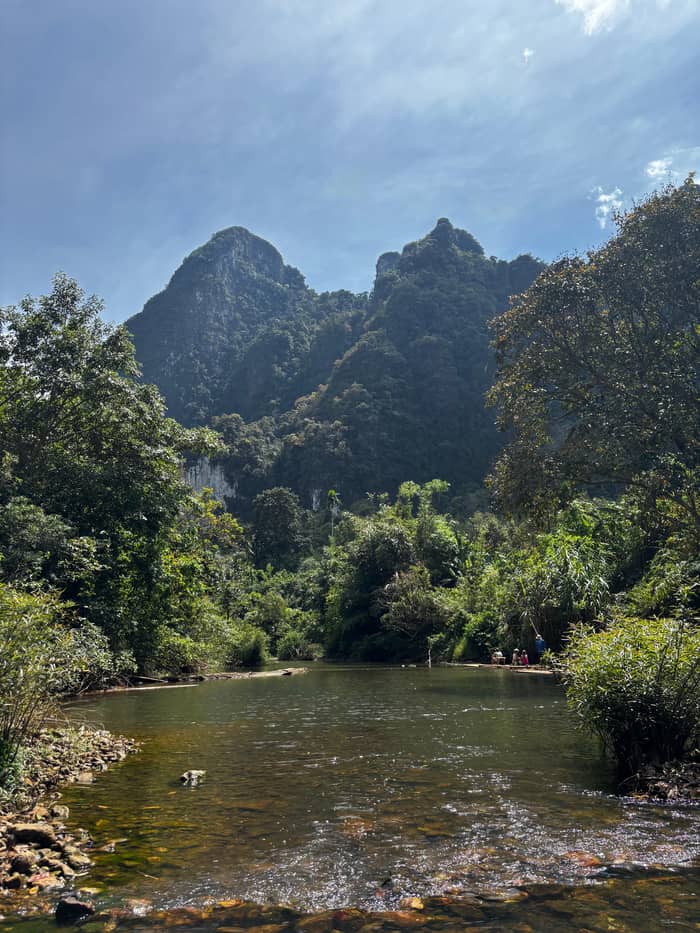
A half day on foot
- Time5 to 5.5 hours
- Walking3.5 hours
- Fromfrom $60
Tap-to-check list
8-item checklist
Tick each item when it is done. Your place is saved on this device.
0 / 8 ready
All set. Only the date and your pickup place are left to choose.
Claim a spotA month-by-month look at heat, daylight and rain from the nearest weather station, what the official sources say about the wet season, and how to match the weather to a day, a night or longer.
Editorial team, khaosokjunglehike.quest · Updated November 16, 2026 · Read in 9 min
Summary view
When is the best time to visit Khao Sok National Park? It hinges on what you want to see, because the park is open and working all year round. The Tourism Authority of Thailand lists boat tours over the reservoir and nights on a floating raft house among the ways to enjoy Khao Sok in any month.4 The calendar changes the mood of the place far more than it changes whether you can go.
If your priority is dry trails, aim for the first quarter. The nearest weather station records 40 mm of rain in January, 7 mm in February and 47 mm in March, with 1, 1 and 2 days of measurable rain.1,1,1 The Thai Meteorological Department adds that rain in southern Thailand is less in February than in the month before.5 Those three months are the safest window for walking. Three months is a small window, so book early if you are set on it, and keep the rest of the guide in mind as a fallback.
If your priority is scenery, the wet months make a case of their own. TAT says the rainy season is an unmissable time for the reservoir views, and that the park's waterfalls are at their most spectacular while the water flow is strongest.2 The trade is simple: more water and more green in exchange for more rain, more mud and a closer eye on the rivers. Neither choice is wrong. The sections below set out what each costs you in comfort and what it gives back in scenery.
Season by season
| Season | Months | What the sources say |
|---|---|---|
| Driest | January to March | Rain 40, 7 and 47 mm in the record1,1,1 |
| Hottest | April | Average high 35.3 °C1 |
| Rains begin | Second half of May | The rains set in, says the TMD7 |
| Monsoon | May to October | Rain of 1-2 hours, afternoon or evening9,10 |
| Wettest | November | 325 mm of rain in the record1 |
| Rain easing | December | 215 mm in the record, abundant early in the month1,8 |
Figures are the NOAA 1991 to 2020 averages of the nearest stations and the Thai Meteorological Department's seasonal notes for southern Thailand.1,8
The chart below uses the National Oceanic and Atmospheric Administration's averages for 1991 to 2020.1 The nearest usable record is the Surat Thani station, 71.5 km from the park, with Phuket Airport, 90.7 km away, filling one month.1 Both are lowland sites, so treat the shape of the year as reliable and the exact millimetres as a guide, and note that one lake-day listing describes Khao Sok as the wettest region of Thailand and tells guests to expect frequent rain.
Heat peaks before the rain. April is the hottest month in the record, with a daily high of 35.3 °C and 71 mm of rain.1 By July the high is 33 °C and the monthly rain is 191 mm,1 and the lowest highs of the year come in November at 30.7 °C, the same month that delivers the heaviest rain on record, 325 mm.1 Compare it with the pattern above and you can see why the driest trails fall in the first quarter and the wettest weeks in the last.
Day length barely moves near this latitude. Mid-month daylight runs from 11.6 hours in December to 12.6 hours in June,1,1 so a trail day starts and ends at roughly the same hour all year, and a night safari always begins after sunset in the early evening. Plan your day around heat and rain, not around light. If you can, choose your start time by the heat, and use the light only to make sure the day ends before the evening storms.
Month by month
Hours lacking sunshine at mid-month, plus days with precipitation of 2.5 mm or more. From NOAA, station Surat Thani (temperatures and rainfall for 11 months, rainfall only for 1 month) and Phuket Airport (1 month), 1991 to 2020.1
Monsoon weather in Thailand runs from May to October, and TAT stresses that this does not mean rain all day.9 TAT describes the typical wet-season shower as brief, 1-2 hours, falling late in the day, which suits an early start that is over by midday.10 The Thai Meteorological Department dates the arrival of the rains to the later part of May.7 That detail matters for planning, because a morning outing is usually finished before the typical rain window opens.
For the south, where Khao Sok sits, the wet season runs later. The department says that in the second half of October the low-pressure trough moves down around southern Thailand and the Gulf,12 that southern Thailand still meets abundant rainfall in November, especially around the east coast,13 and that abundant rain mostly falls in the first half of December.8 That matches the station record, where November is the peak and December still carries 215 mm.1,1
Heavy rain is a real hazard here, not just an inconvenience. The Department of National Parks reported a flash flood in the Khlong Sok subdistrict, beside the park, on 18 September 2026,14 when park staff and rescue foundations reached residents and foreign tourists stranded at riverside resorts and all were safe.15 In the wet months, ask the operator how it handles river levels, and keep a day free in case a trip is moved.
What now?
Say what you care about and the table below names the months that serve it.
If I want the driest trails
January to March
If I want the strongest waterfalls
The rainy season
TAT says the water flow is at its most spectacular then.2
If I dislike heat
Avoid April
April has the highest average daily high, 35.3 °C.1
If I want the beach too
December to May
TAT calls that the best time for the Andaman islands and beaches.11
If I can only spare a day
Start early
Rain is typically 1-2 hours in the afternoon or evening.10
How long to stay
Short
A half day on foot
Classic
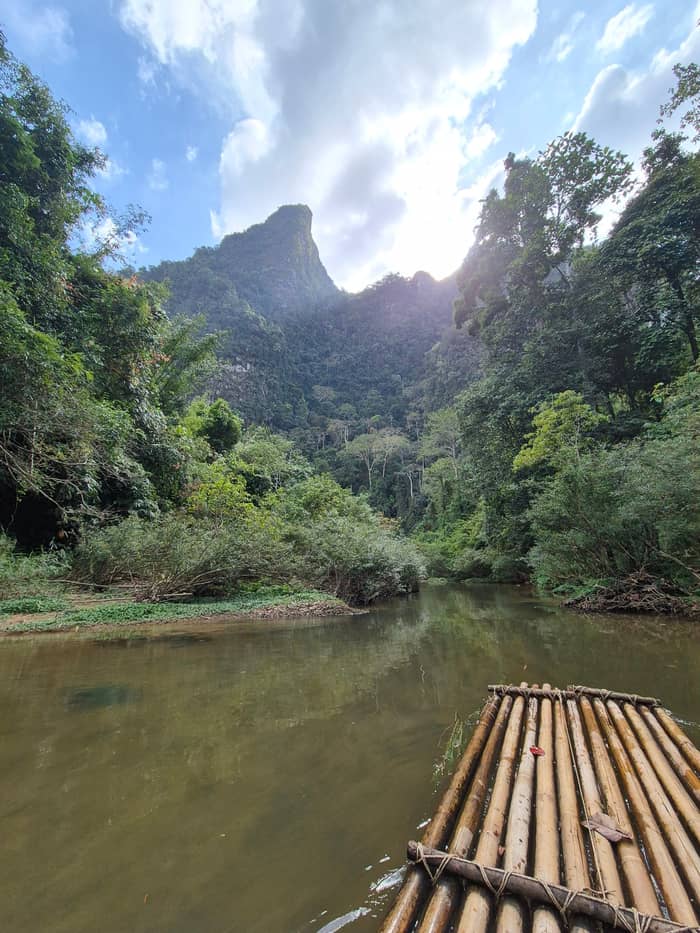
Trail, lunch and raft
Longer
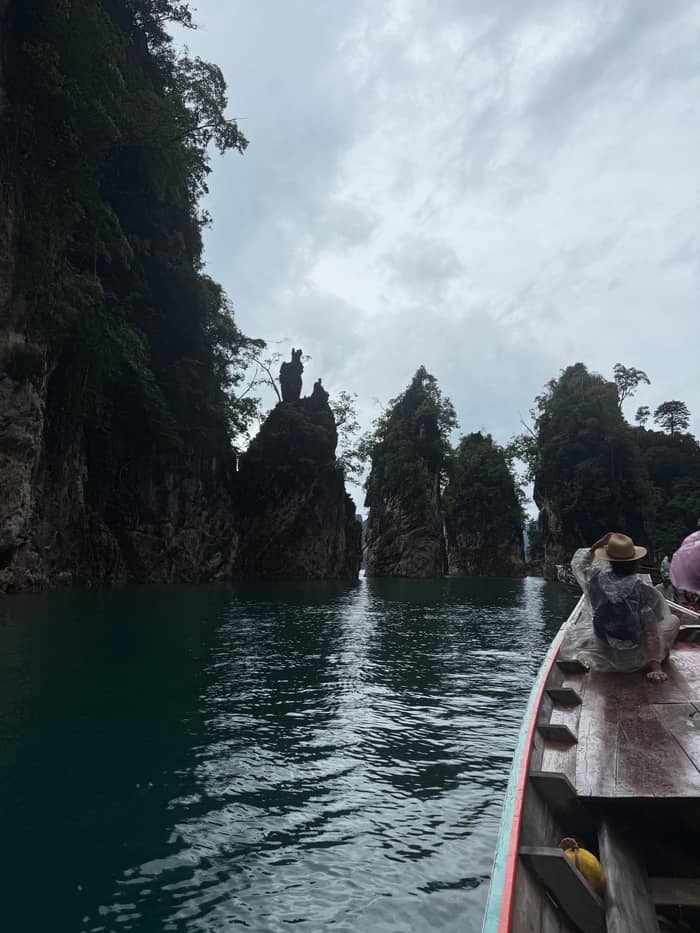
Overnight, a raft house
The cool months are only cool by Thai standards. December's record reads 31.7 °C by day and 22.7 °C at night,1 and January's reads 31.1 °C by day and 21.3 °C at night.1 The Thai Meteorological Department says southern Thailand does not feel much chill in January, because it is surrounded by sea on both sides.6 Carry a light layer for the evenings in the green season, and a hat and sun cream for every month of the year, since the highs never drop below 30 °C in the record.1
March and April are the hot months. March averages a high of 34.3 °C and April 35.3 °C,1,1 and the dry trails then reward an early start before the sun climbs. The river stops on tours are most welcome in those months, and the swimming hole, raft and lake make the day easier than a hot walk in the dry season would otherwise be. In practice that makes the first quarter the easiest period for a first trip, with the hot trail rewarded by a cool stream stop.
Between the extremes, the shoulder months of May to July keep highs between 33 and 34.4 °C with rain on 9 to 11 days a month.1,1,1 That is a pattern, not a prediction: in May the department says the low-pressure trough over Malaysia moves up over southern and central Thailand.18 Accept that some days will be wet and plan the walk for the early part of the morning. Choose a small group so the guide can shorten the walk if the heat is too much for anyone in the party.
Price your timing
Enter your party and compare the lengths of stay.
Compare 3 alternatives
Enter your party and compare the lengths of stay.
≈
View≈
View≈
ViewGetYourGuide's starting prices, converted at the ECB reference rate; exact pricing appears when you book.
A year in the park
Early year
The driest months in the record; a southern Thailand without much chill.1,6
Hot spell
April has the highest average daily high, 35.3 °C.1
Late spring
The department says the rains set in during the later part of May.7
Green season
TAT says the waterfalls are most spectacular in the rainy season.2
Autumn peak
November brings the heaviest rain in the record, 325 mm.1
Year end
December still carries 215 mm, and abundant rain early in the month.1,8
A national park changes its own opening status through the year. TAT warns that the open or closed status of national parks can change with no prior notice,19 and its 2023 status list showed the park itself open.20 The same list shows Nam Thalu Cave closed from 1 June to 30 November,16 so a cave you read about may not be open when you arrive. Those are the facts on closures, and the sensible response is a loose plan with a day in hand and an operator who answers messages.
Closure dates differ from year to year, and the park's own list for each year is the authority. Nothing on a tour page replaces it, so ask your operator whether a named site is open on your date, and ask again if the weather has been wet. A tour that runs rain or shine, as the full-day walk record says, can still change its stops. If you travel in the wet months, keep your plans loose and your bookings refundable, and let your guide make the call on rivers.
Lake days follow their own calendar. Boats and floating raft houses work throughout the year according to TAT,4 and one lake-day listing warns of frequent rain and asks for covered shoes or sandals at the cave when the weather is wet. Check the cancellation window of your booking: the home tour returns your money in full for a cancellation made 24 hours or more before the start. The half-day hike record gives the same 24-hour window, so compare that line before you pay for anything.
Video
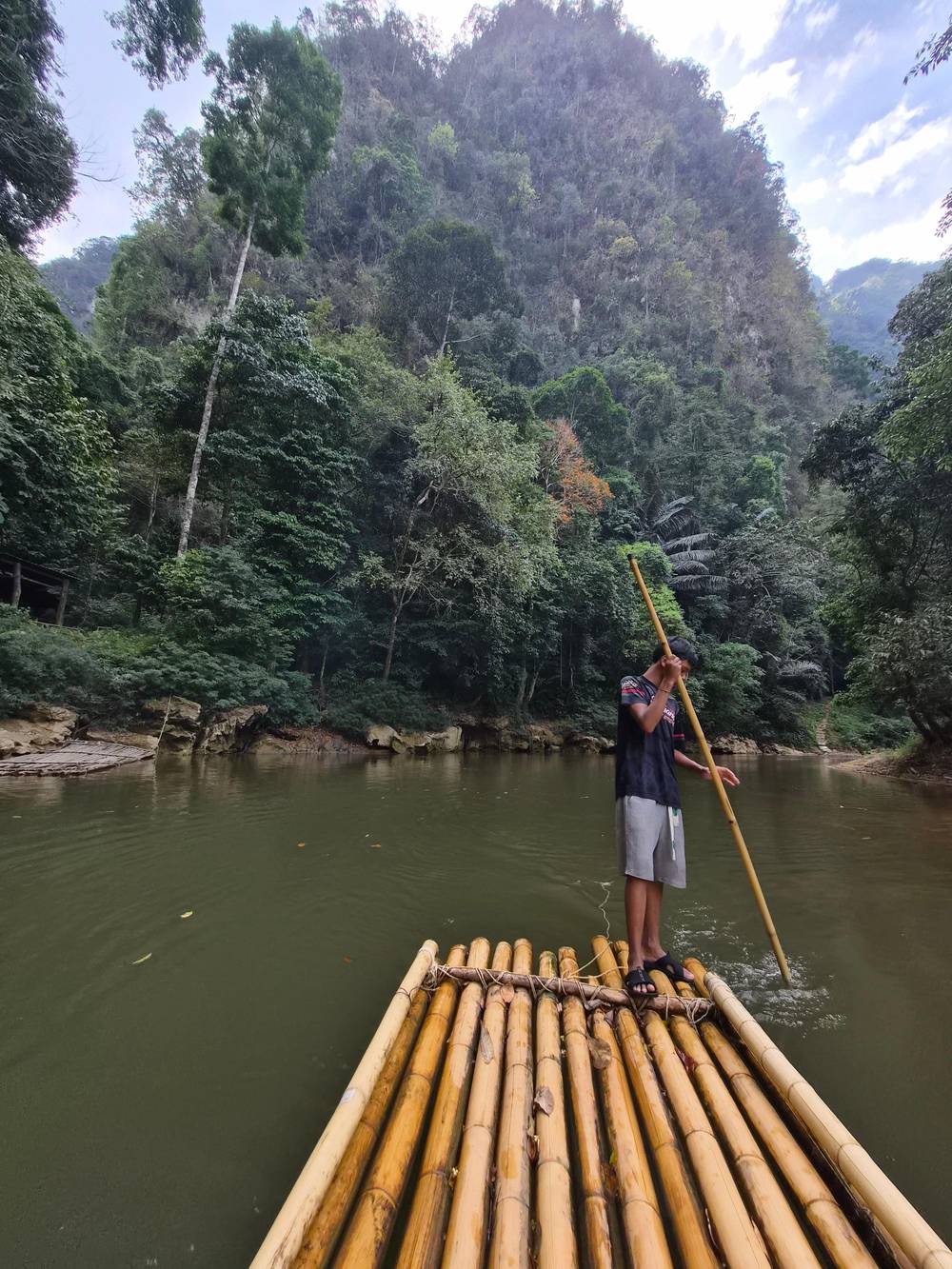
Rachel & Ibe on YouTube · Tap play to load the video; not before.
The morning mist drifting over the water’s surface creates a tranquil atmosphere
A common question is how long to stay in Khao Sok National Park, and a day is enough for a first look. The home tour packs a jungle trail, a Thai lunch, a bamboo raft and a view point into 8.5 hours with pickup in Khao Lak, and a half-day hike fits into 5 to 5.5 hours. If you have a single day, choose it in the dry first quarter, and start early. For anyone short of time, the day trip is the right size, and the extra days are for people who want slower mornings.
Two days change the experience. A lake trip of 2 days from Khao Lak or Phuket, capped at 8 guests, adds breakfast kayaking, a cruise, a jungle walk of about 2 kilometres and the Diamond Cave, and TAT suggests spending a night in a floating eco-bungalow.21 The morning mist drifting over the water is part of the reward for staying.3 A night on the lake also gets you out of the daily van ride, so the early hours belong to the water and not to the road.
Three days or more suit walkers and photographers who want both sides of the park, the trails near the headquarters and the lake to the east, without the stress of a day tour's schedule. TAT even builds a 3-day Surat Thani route that pairs Khao Sok's rainforest scenery with a day on Cheow Lan Lake.22 Pick the length that matches your appetite for walking, and book the night before the early start.
Treat this as a Khao Sok National Park travel guide by season, and use the seasons as a planning tool. In the dry first quarter, book the long walk or the lake day and expect heat by midday. In the shoulder months of April to June, shift outings to the morning and keep the afternoon for the river, the raft or a rest.1 In the wet months, choose the waterfalls and the lake views, and accept that a trip may change on the day. The same logic applies to your choice of tour, since the shorter outings are easier to rearrange if a storm rolls in.
For anyone building a wider plan, the park sits between the Andaman coast and the Gulf. Islands and beaches on the Andaman side are at their best from December to May, in TAT's view,11 which overlaps with the dry months of the park and makes a combined trip logical. Beach and jungle in one journey work best in that window, while the park stands on its own in the green season. A trip that links the park with the coast should be built around the season of the coast, since the park runs all year.
Whatever the month, book with a cancellation window you can live with, carry rain protection in a dry bag, and tell your guide about any weak swimmer before the first river stop. The checklist below turns the season into a packing and booking routine, and the what-to-bring page goes through gear in detail for the park's rain and its heat. Wherever you land, an early start is the single piece of advice that suits every season in the park.
FAQ
TAT says boat tours and raft houses let visitors enjoy Khao Sok throughout the year.4
The record shows 325 mm of rain on 12 days in November.1
April carries the highest daily high in the record, 35.3 °C on average.1
The home tour takes 8.5 hours, and a 2-day lake tour adds a night.
TAT calls the park's waterfalls most spectacular in the rainy season.2
The 2023 TAT list showed Nam Thalu Cave closed from 1 June to 30 November.16
Sources
Heading to Khao Sok? Ask a real person here.